A Practical Guide to Haiti’s Hearty Vegetable Stew
Introduction
There are Haitian dishes that get attention because they are fried, spicy, or immediately recognizable.
Then there is Legim.
Legim does not need crispy edges or an elaborate presentation to earn its place at the Haitian table. Its appeal comes from something different: vegetables slowly cooked with epis, herbs, spices, and often meat until everything comes together in a rich, deeply seasoned stew.
For many Haitian families, a pot of Legim means a serious meal is being prepared.
Serve it over freshly cooked white rice, add avocado or bannann on the side, and you have the kind of dinner that can bring everyone to the table.
But making good Haitian Legim requires more than putting vegetables into a pot.
The vegetables need to be selected carefully.
The meat, when used, should be properly seasoned.
The vegetables need enough cooking time to become tender without turning the entire dish into an indistinguishable purée.
The seasoning has to reach the vegetables rather than sitting in the cooking liquid.
And perhaps most importantly, the final texture should feel like Legim.
That texture is one of the characteristics that separates Haitian Legim from an ordinary vegetable soup or stew.
In this guide, we will cover:
- What Haitian Legim is
- The cultural role of Legim in Haitian cooking
- Traditional vegetables used in Legim
- Common proteins
- How epis seasons the dish
- How eggplant affects texture
- Why cabbage matters
- How to prepare the vegetables
- Cooking principles that produce better Legim
- Common family variations
If you grew up eating Legim, some of these techniques may already feel familiar. If you are learning Haitian cooking for the first time, understanding why each ingredient is used will make the recipe much easier to master.
What Is Haitian Legim?
Legim, from the French word légume, is the Haitian Creole term for vegetables and is also commonly used to describe a traditional Haitian vegetable stew.
The dish combines several vegetables that are cooked until tender and then partially mashed or broken down.
Depending on the household, Haitian Legim may contain:
- Eggplant
- Cabbage
- Chayote
- Carrots
- Spinach
- Watercress
- Bell peppers
- Onions
- Scallions
Beef is a common protein, although crab, pork, seafood, or other meats may appear in family and regional preparations.
Some cooks also prepare meatless Legim.
The finished dish should be thick enough to spoon over rice rather than resemble a thin soup.
That distinction matters.
When properly prepared, the vegetables create much of the body of the stew naturally.
Legim and the Haitian Family Table
Legim is one of those dishes that demonstrates how Haitian cooks can take everyday ingredients and build a substantial family meal.
A pot can contain several vegetables, meat, herbs, and seasoning, making it especially useful when feeding a household.
For many people, Legim is connected to home cooking rather than restaurant presentation.
You may remember a parent or grandparent standing over a large pot, checking the vegetables, adjusting the seasoning, and deciding when the eggplant and cabbage were soft enough to mash.
Those decisions were not always made with a timer.
Experienced cooks learned to look at the vegetables, smell the pot, taste the broth, and feel the texture.
That kind of cooking knowledge is worth preserving.
Writing down a recipe gives us measurements.
Understanding the technique teaches us how to cook.
Why Haitian Legim Is Different From Ordinary Vegetable Stew
At first glance, someone unfamiliar with Haitian food might describe Legim simply as mixed vegetables with meat.
That description misses what makes the dish distinctive.
The vegetables do not remain completely separate as they would in many vegetable soups.
Instead, ingredients such as eggplant, cabbage, and chayote soften considerably during cooking. Some of the vegetables are then mashed or broken down, creating a thick vegetable base.
Other ingredients retain enough texture to remain noticeable.
The result sits somewhere between a stew and a vegetable mash.
Then comes the Haitian seasoning foundation.
Epis, garlic, thyme, peppers, onions, and other aromatics build the savory character of the dish.
If meat is included, its seasoned cooking liquid can become another source of flavor.
Nothing should taste as though it was simply boiled in plain water.
Traditional Vegetables Used in Haitian Legim
One of the first things new cooks discover about Legim is that there isn't one rigid vegetable list followed by every Haitian family.
Availability matters.
Region matters.
Family tradition matters.
What was available at the market often influenced what went into the pot.
Still, several ingredients appear frequently.
Eggplant
Eggplant is one of the most useful vegetables for developing the characteristic texture of Legim.
As it cooks, the flesh becomes extremely soft and begins to break down.
That softness helps create the thick body of the finished stew.
Look for eggplants that feel firm and heavy without large soft spots or badly wrinkled skin.
Depending on the type and your family's method, the eggplant may be peeled completely, partially peeled, or prepared with some skin remaining.
The goal is tenderness.
When properly cooked, the eggplant should blend naturally with the other vegetables rather than remain as hard cubes.
Cabbage
Cabbage contributes volume, mild sweetness, and texture.
As it cooks, it softens and becomes incorporated into the vegetable mixture.
Cutting cabbage into manageable pieces makes it easier to cook evenly and mash later.
Avoid thinking of the cabbage as a separate side dish.
In Legim, it becomes part of the structure of the stew.
Chayote
Chayote, sometimes called mirliton in parts of the Caribbean and Louisiana, appears in many Haitian Legim preparations.
Its mild flavor allows it to absorb the seasonings around it.
It also softens well during cooking without bringing an overpowering taste.
When shopping, choose chayote that feels firm rather than shriveled or excessively soft.
Carrots
Carrots contribute natural sweetness, color, and texture.
They are firmer than eggplant and require enough cooking time to become tender.
Cutting them into relatively consistent pieces helps them cook evenly.
Spinach
Spinach can add leafy-green character and additional body.
Because spinach cooks quickly, consider when you add it relative to harder vegetables such as carrots.
Not every ingredient needs to enter the pot at exactly the same moment.
Watercress
Watercress appears in some Haitian family recipes and contributes a slightly peppery green flavor.
As with many Legim ingredients, its use depends on family tradition and availability.
Bell Peppers
Bell peppers contribute aroma, sweetness, and another layer of vegetable flavor.
Green bell pepper is common in Haitian cooking, although other colors can also be used.
What Meat Is Used in Haitian Legim?
Beef is one of the most common proteins used in Legim.
Cuts suitable for stewing work particularly well because they can be cooked until tender while producing flavorful cooking liquid.
Depending on family tradition, Legim may also be prepared with:
- Beef
- Pork
- Crab
- Blue crab
- Seafood
- Smoked meats
- No meat at all
The protein should complement the vegetables rather than dominate them.
This is still Legim.
The vegetables are not merely a garnish surrounding a plate of meat.
Seasoning the Meat
If you are using beef, season it before building the rest of the dish.
This is another place where epis becomes valuable.
Coat the meat with epis and the herbs and seasonings used in your family's recipe.
Allow it to marinate under refrigeration when time permits.
Then cook the meat until it begins approaching tenderness before combining it with vegetables that require less cooking time.
This sequencing matters.
If tough beef and delicate spinach go into the pot simultaneously, one ingredient will probably be ready long before the other.
Good Legim requires understanding cooking times.
Epis and Haitian Legim
By the sixth article in this Dinner Ideas Collective series, you have probably noticed a pattern.
Epis keeps returning.
That is not accidental.
Epis is one of the seasoning foundations connecting many Haitian dishes.
In Griot, it seasons pork.
In Pwa Wouj, it contributes to the bean broth.
In rice dishes, it helps establish the aromatic base.
In Legim, it connects the vegetables and meat through a familiar Haitian flavor profile.
A typical epis may include garlic, parsley, thyme, scallions, peppers, onions, and other aromatics.
If you haven't read our complete guide yet, visit the Dinner Ideas Collective Haitian cooking library and read What Is Epis? The Complete Guide to Haiti's Signature Seasoning.
Dinner Ideas Collective also offers Epis Dry Blend seasonings and Haitian cooking resources for home cooks who want a convenient option for everyday meals.
Preparing the Vegetables
Before cooking, wash your vegetables thoroughly and prepare them according to their different textures.
This is not a recipe where every vegetable should automatically be chopped into identical tiny cubes.
Think about what each ingredient needs to do.
Eggplant needs to become very tender.
Cabbage needs to soften enough to integrate into the mixture.
Carrots should become tender without disappearing.
Leafy greens cook much faster.
Chayote needs enough time to soften.
Understanding those differences helps you decide when ingredients should enter the pot.
This is more useful than blindly following a timer.
Why Legim Is Mashed
The mashing stage is one of the defining techniques of the dish.
Once the appropriate vegetables are tender, they are partially mashed or broken down.
The goal is not baby food.
You do not necessarily want a perfectly smooth vegetable purée.
Instead, the mashed eggplant, cabbage, chayote, and other vegetables create the thick base while leaving enough texture for the dish to remain substantial.
Some cooks remove vegetables from the pot, mash them, and return them.
Others work directly in the pot.
Family technique varies.
What matters is the final consistency.
When you spoon Legim over rice, it should sit on the rice and mingle with it rather than immediately run to the bottom of the plate like broth.
Do You Need Tomato Paste?
Tomato paste appears in many Haitian Legim recipes, although preparations vary.
When used, it contributes color, acidity, and savory depth.
A common mistake is adding too much.
Legim should not become tomato sauce with vegetables in it.
If tomato paste is part of your recipe, treat it as a supporting ingredient.
Cooking the paste briefly with the aromatics before adding additional liquid can soften its raw taste and help distribute it throughout the dish.
Scotch Bonnet Pepper
Scotch bonnet can contribute both heat and aroma.
As with Griot and Diri Kole, you have choices.
A whole pepper can be added carefully to the pot to contribute aroma while limiting how much heat escapes.
A chopped pepper will distribute considerably more heat.
If you are cooking for people with different tolerances, keeping the Legim moderately hot and serving Pikliz on the side can be practical.
That way, each person controls the final heat level.
The Importance of Cooking in Stages
One of the biggest lessons in Haitian Legim is that everything does not need to happen at once.
You may:
Season the meat first.
Cook the meat until tender.
Prepare the vegetables separately or add them according to cooking time.
Mash the softened vegetables.
Build the seasoned sauce.
Bring the meat and vegetables together.
Taste.
Adjust.
Simmer until the consistency is right.
That sounds like more work than dumping everything into one pot, but each stage gives you greater control.
The reward is meat that is tender, vegetables that have the correct texture, and seasoning that tastes developed rather than rushed.
What Should Good Haitian Legim Taste Like?
A good Legim should taste like vegetables first, but vegetables that have been thoroughly seasoned.
You should notice savory epis and herbs.
The eggplant should contribute body without overwhelming the dish.
The cabbage should be tender.
The carrots should bring mild sweetness.
The meat should be flavorful and tender if you're using it.
The sauce should be thick enough to coat the rice.
Most importantly, the ingredients should taste connected.
You should not feel as though you are eating boiled cabbage, separate pieces of beef, and tomato sauce in the same bowl.
Everything should belong together.
What to Serve With Haitian Legim
White rice is one of the classic choices.
The relatively neutral rice gives the seasoned vegetable stew room to stand out.
Legim can also be served with:
- Diri Kole
- Diri Blan
- Avocado
- Bannann
- Pikliz
- Additional vegetables
If serving Legim with white rice, spoon some of the thick vegetable mixture directly over the rice.
Make sure everyone gets vegetables, sauce, and meat if meat is included.
For a fuller Haitian meal, add avocado or plantain on the side.
Legim as Part of the Haitian Cooking Series
This article brings together many of the techniques we've covered so far.
The series began with Diri Kole, where we learned how beans and seasoned broth build flavor into rice.
Then came Pwa Wouj, where we looked more closely at the beans themselves.
Next came epis, the seasoning foundation connecting so many Haitian recipes.
Pikliz taught us how acidity, heat, and crunch balance rich foods.
Griot showed how seasoning, tenderness, and browning work together.
Now Legim introduces another major Haitian cooking skill: transforming several vegetables into one cohesive, deeply seasoned dish.
This is how you begin moving beyond individual recipes and start understanding the structure of Haitian cooking.
Explore the growing collection through the Dinner Ideas Collective recipe and cooking library.
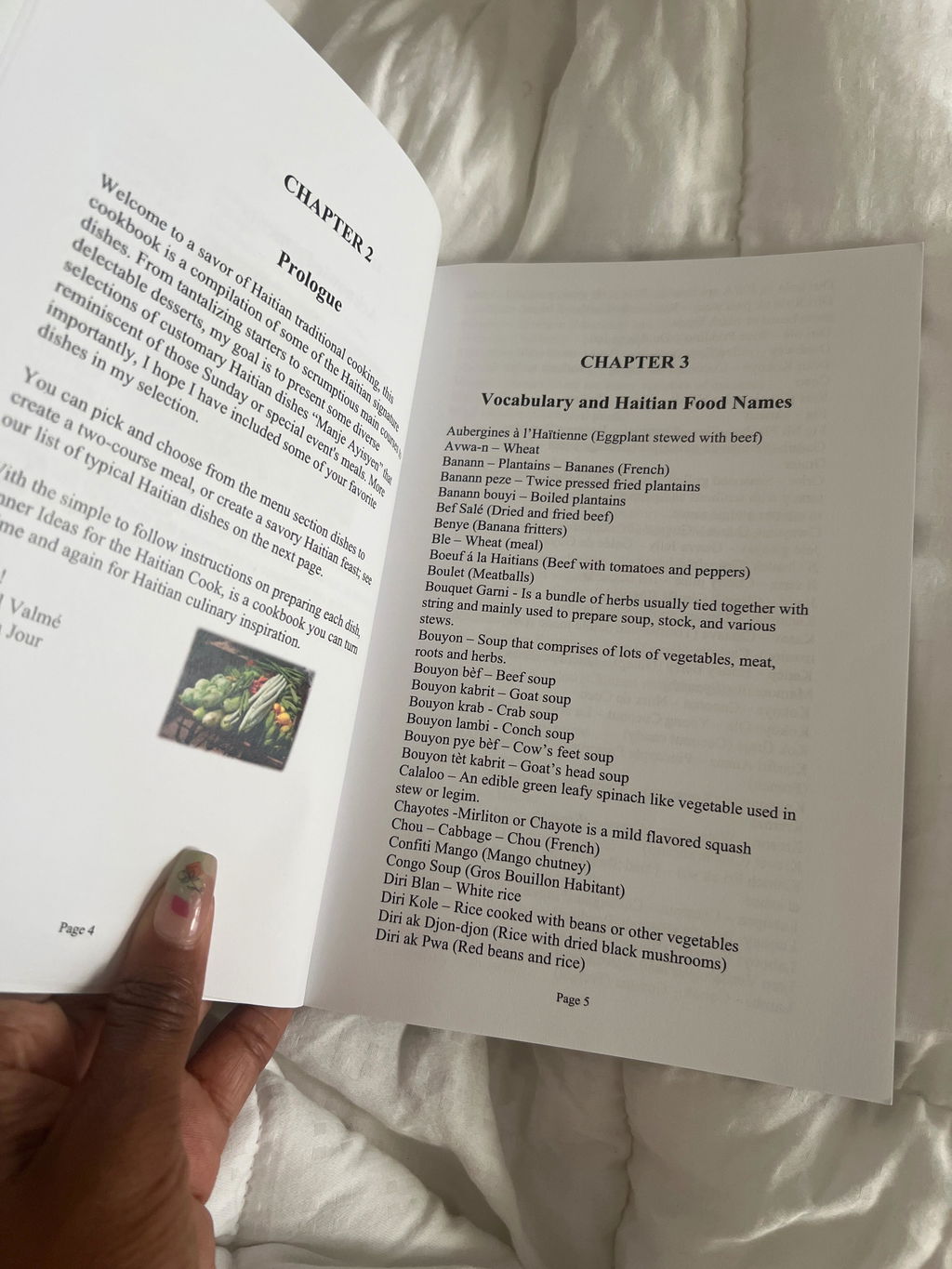
For additional recipes and instruction, Dinner Ideas for the Haitian Cook (Second Edition) is available through Dinner Ideas Collective along with Epis Dry Blend Mild, Epis Dry Blend Hot, and Pwason Citron Blend.
Step-by-Step Preparation, Cooking Techniques, Common Mistakes, and Variations
Making good Haitian Legim is less about following a rigid formula and more about understanding how the ingredients behave in the pot.
Beef may need considerable time to become tender. Eggplant and chayote need enough cooking time to soften so they can help create the body of the stew. Cabbage needs to become tender without taking over the dish. Carrots provide texture and mild sweetness, while leafy greens cook much faster.
When you understand those differences, Legim becomes easier to manage.
This section walks through the cooking process from seasoning the meat to bringing the finished vegetable stew together.
Ingredients for Traditional Haitian Legim
There is no single ingredient list used in every Haitian household. A practical traditional version may include:
- Beef chuck or another stewing beef
- Eggplant
- Green cabbage
- Chayote
- Carrots
- Spinach or watercress
- Bell pepper
- Onion
- Scallions
- Garlic
- Fresh thyme
- Epis
- Tomato paste
- Scotch bonnet pepper
- Lime or sour orange, according to family preference
- Salt
- Black pepper
- Cooking oil
- Water or cooking liquid as needed
Some households add blue crab or another protein. Others leave out meat entirely.
Think of this ingredient list as a foundation rather than a rule that prevents you from following your family's traditions.
Step 1: Prepare and Season the Beef
If you're making beef Legim, begin with the meat.
Choose a cut suited to slow cooking, such as beef chuck or another stewing cut with enough connective tissue to become tender during simmering.
Cut the beef into substantial, relatively even pieces.
Season it with epis, thyme, garlic, citrus if using, salt, black pepper, and the additional seasonings used in your household.
Coat the meat thoroughly rather than seasoning only the top layer.
If time permits, cover and refrigerate the seasoned beef before cooking. This also gives you time to wash and prepare the vegetables.
Dinner Ideas Collective's guide to Haitian epis explains why this seasoning base appears so frequently throughout Haitian cuisine. You can explore that guide and other recipes in the Dinner Ideas Collective Haitian cooking library.
Step 2: Cook the Beef Until Tender
Place the seasoned beef and its aromatics into a heavy pot.
Cook according to your preferred method until the beef becomes tender.
The exact cooking time depends on the cut, size of the pieces, and cooking temperature, so tenderness is a better guide than the clock alone.
You should be able to pierce the meat without excessive resistance.
Do not automatically discard the cooking liquid.
That liquid contains flavor from the beef, epis, herbs, garlic, and other seasonings. It can become part of the Legim later.
This is the same principle we discussed when making Griot. Flavor left in the pot can often be put to work elsewhere in the dish.
Once the beef is tender, remove it temporarily if necessary while you prepare the vegetable portion.
Step 3: Prepare the Eggplant
Wash the eggplant and remove the stem.
Depending on your preference, peel it completely, partially peel it, or leave some skin intact.
Cut the eggplant into manageable pieces.
You do not need perfect cubes because much of the eggplant will eventually break down.
Its job is different from the carrots.
The carrots may remain recognizable in the finished Legim. Eggplant helps create the thick vegetable body.
Step 4: Prepare the Cabbage
Remove damaged outer leaves and rinse the cabbage.
Cut it into manageable sections and remove the tough core.
Then chop or slice it into pieces that can soften evenly.
Avoid enormous chunks.
You eventually want the cabbage to become integrated with the other vegetables.
Step 5: Prepare the Chayote
Wash and peel the chayote according to your preferred method.
Cut it into sections.
Like eggplant, chayote has a mild flavor and absorbs seasoning well. Once tender, it can be partially mashed with the other vegetables.
Step 6: Prepare the Carrots and Greens
Peel and cut the carrots into pieces of similar size.
Wash your spinach, watercress, or other leafy greens thoroughly.
Keep in mind that these ingredients do not cook at the same rate.
Carrots need more time.
Leafy greens need less.
This is why preparing everything before you begin assembling the vegetable portion makes cooking easier.
Step 7: Cook the Firm Vegetables
Add the vegetables that need more cooking time first.
Depending on your method, that may include:
- Eggplant
- Cabbage
- Chayote
- Carrots
Add enough cooking liquid to help the vegetables steam and simmer without turning the pot into soup.
Cover and cook until the vegetables become tender.
Check them periodically.
You are looking for eggplant and chayote that can be mashed easily and cabbage that has softened considerably.
Step 8: Add the Leafy Greens
Once the firmer vegetables are well underway, add spinach, watercress, or whichever greens you are using.
Greens lose volume quickly as they cook.
A large amount of raw spinach can look excessive when it first enters the pot and then shrink considerably within minutes.
Fold the greens into the vegetables and allow them to soften.
Step 9: Mash the Vegetables
This is where the mixture begins to look like Legim.
Once the vegetables are tender, partially mash them.
You can use a potato masher, large spoon, wooden utensil, or another suitable kitchen tool.
Do not feel obligated to make everything perfectly smooth.
Good Legim can have texture.
You may still see strands of cabbage, pieces of carrot, and portions of greens.
The eggplant and chayote help bind everything together.
Think thick vegetable stew, not vegetable smoothie.
Step 10: Build the Seasoned Base
In a separate area of the pot, or in another pan if your method calls for it, heat a modest amount of oil.
Add onion, bell pepper, scallions, garlic, and additional epis if needed.
Cook until aromatic.
If using tomato paste, add it at this stage.
Cook the tomato paste briefly with the aromatics rather than immediately diluting it with water.
This helps remove some of the raw tomato-paste taste and distributes it more evenly throughout the dish.
Again, use restraint.
The purpose of tomato paste is to support the Legim.
The final dish should not taste like tomato sauce.
Step 11: Bring Everything Together
Combine the mashed vegetables with the seasoned base.
Return the cooked beef to the pot.
Add some of the reserved beef cooking liquid as needed.
Mix carefully.
At this point, you should begin seeing the finished dish take shape.
The vegetables provide the body.
The beef contributes richness.
The epis and aromatics bring the Haitian seasoning profile.
The tomato paste contributes color and savory flavor.
Now let the mixture simmer gently so those elements can come together.
Step 12: Add the Scotch Bonnet
If you want pepper aroma without aggressive heat, add a whole Scotch bonnet pepper to the pot.
Keep the pepper intact.
If it breaks open, considerably more capsaicin can enter the stew.
If your family enjoys hot Legim, you may deliberately slice or crush the pepper.
That is a household decision.
For a mixed group, I prefer keeping the Legim moderately seasoned and letting Pikliz provide additional heat at the table.
Step 13: Check the Consistency
Legim should be thick.
When spooned over rice, it should coat the rice rather than disappear underneath it.
If your Legim is too thin, continue simmering uncovered so excess liquid can evaporate.
If it becomes too thick, add a small amount of reserved cooking liquid.
Do this gradually.
It is much easier to thin Legim than to remove a large amount of unnecessary liquid.
Step 14: Taste Before Serving
Never assume the seasoning is finished simply because the vegetables are cooked.
Taste the Legim.
Ask yourself:
Does it need salt?
Can I taste the epis?
Are the vegetables well seasoned?
Is the tomato paste too noticeable?
Does it need more thyme?
Is the pepper level right?
Is the consistency thick enough?
Does the beef taste like it belongs in the same dish as the vegetables?
Make small adjustments.
Then allow the Legim to simmer briefly so the final seasoning distributes throughout the pot.
Common Mistakes When Making Haitian Legim
Mistake 1: Adding Too Much Water
This is one of the easiest ways to turn Legim into vegetable soup.
Vegetables release moisture as they cook.
Start conservatively with liquid and add more only when needed.
Mistake 2: Underseasoning the Vegetables
Seasoning the beef well does not automatically season an entire pot of vegetables.
Taste the vegetable mixture itself.
The eggplant, cabbage, chayote, and greens should have flavor even when eaten without a piece of meat.
Mistake 3: Overusing Tomato Paste
Tomato paste can contribute useful flavor and color, but too much changes the identity of the dish.
You are making Legim, not tomato-based beef stew.
Mistake 4: Cooking Every Vegetable for the Same Amount of Time
Carrots and spinach do not behave the same way.
Pay attention to texture and add ingredients according to how much cooking they need.
Mistake 5: Blending Everything Until Smooth
Legim should have body, but that does not require turning the vegetables into purée.
Partial mashing creates a more traditional, substantial texture.
Mistake 6: Leaving the Vegetables Too Chunky
The opposite can also happen.
If the eggplant, cabbage, and chayote remain as large separate pieces, the characteristic Legim texture never develops.
The goal is a middle ground.
Mistake 7: Using Tough Meat Without Giving It Enough Time
If the beef is still chewy when the vegetables are ready, the final dish suffers.
Cook stewing beef until properly tender before completing the Legim.
Mistake 8: Letting Scotch Bonnet Break Accidentally
A whole pepper can contribute aroma.
A broken pepper can change the heat level of the entire pot very quickly.
Handle it carefully unless intense heat is intentional.
Meatless Haitian Legim
You do not have to use meat to prepare a satisfying pot of Legim.
For a meatless version, concentrate on building flavor through:
- Epis
- Garlic
- Thyme
- Onion
- Bell pepper
- Scallions
- Scotch bonnet
- Tomato paste
- Properly seasoned vegetables
Without meat cooking liquid, you may need to pay closer attention to the savory foundation.
The vegetables should still be the focus.
A well-seasoned meatless Legim can stand on its own over rice without trying to imitate beef.
Legim With Crab
Some Haitian families prepare Legim with crab, which creates a very different experience from beef.
Crab contributes seafood flavor throughout the vegetable mixture.
If you use whole pieces of crab, let everyone at the table know what is in the pot, particularly when shells remain.
The seafood should complement the vegetables rather than overpower them.
Dinner Ideas Collective's Pwason Citron Blend and Haitian seasoning collection can also help home cooks explore the role of citrus and herbs in Haitian seafood cooking.
What Rice Goes Best With Legim?
For many people, the answer is simple:
Diri Blan.
Plain white rice provides a neutral foundation that allows the seasoned vegetables and meat to take center stage.
Spoon the Legim generously over the rice so the vegetable mixture works its way between the grains.
Diri Kole is another option, particularly when you want a fuller meal.
If you are still working on your rice technique, visit the Dinner Ideas Collective Haitian recipe library for our detailed guide to traditional Haitian Diri Kole.
Building a Complete Haitian Legim Dinner
A practical dinner could be:
Diri Blan + Legim + Beef + Avocado
You might also serve:
Diri Kole + Legim + Bannann + Pikliz
You do not need six side dishes to make the meal feel complete.
Legim already contains several vegetables and, depending on your recipe, protein.
Let it be the centerpiece.
Making Legim Ahead of Time
Legim is a useful make-ahead meal because the vegetables and seasonings have already been cooked together.
You can prepare it ahead for:
- Sunday dinner
- Weekday lunches
- Family gatherings
- Meal preparation
- Church meals
If cooking for a gathering, prepare the Legim ahead and reheat it gently rather than trying to complete every stage while guests are arriving.
Keep rice separate until serving.
Using Epis Dry Blend in Legim
Fresh epis is a traditional way to build the seasoning foundation, but there are times when washing, chopping, and blending fresh herbs is not practical.
Dinner Ideas Collective's Epis Dry Blend Mild and Epis Dry Blend Hot provide another option for busy home cooks.
They can be prepared with oil, vinegar, and water to create an epis-style seasoning base for recipes such as Legim, Griot, chicken, beans, and rice.
The goal is not to change what Legim is.
It is to make Haitian home cooking more practical when time is limited.
Explore the Dinner Ideas Collective collection for Haitian cooking resources, seasonings, and Dinner Ideas for the Haitian Cook (Second Edition).
The Cooking Lesson Behind Legim
Legim teaches something that applies far beyond this one recipe.
A good cook pays attention to sequence.
The beef needs its time.
The eggplant needs its time.
The carrots need theirs.
The spinach needs much less.
The tomato paste needs to cook before being diluted.
The vegetables need to be mashed only after they are tender.
The finished mixture needs time to simmer after everything comes together.
Once you understand those relationships, you stop treating the recipe as a list of instructions to memorize.
You begin understanding what is happening inside the pot.
That knowledge makes it easier to adjust when your eggplant is larger than usual, your beef needs another 20 minutes, your cabbage releases more water than expected, or your family prefers a thicker Legim.
That is how recipes become cooking skills.
Storage, Reheating, FAQs, Serving Ideas, and Final Thoughts
A pot of Legim represents one of the strengths of Haitian home cooking: taking vegetables, aromatics, epis, and often meat and turning them into a satisfying meal that can feed a family.
Once you have learned how to control the texture, cook the vegetables in the right sequence, and develop the seasoning throughout the pot, Legim becomes a dish you can adapt according to what is available in your kitchen.
It is also an excellent meal to prepare ahead.
In this final section, we will cover storing and reheating Legim, answer common questions, explore traditional serving combinations, and connect what we have learned about Legim to the larger foundation of Haitian cooking.
How to Store Haitian Legim
Allow leftover Legim to cool before transferring it to shallow, airtight food-safe containers.
Refrigerate it promptly.
According to USDA guidance for cooked leftovers, refrigerated dishes should generally be eaten within 3 to 4 days.
Store the rice separately whenever possible.
Keeping Legim and rice in different containers makes reheating easier and helps preserve the texture of both foods.
If your Legim contains meat or seafood, proper refrigeration becomes especially important.
Can You Freeze Haitian Legim?
Yes.
Legim can be frozen, although some vegetables may become softer after thawing.
That usually creates less of a problem with Legim than with dishes where vegetables need to remain crisp because many of the vegetables in Legim are already cooked until very tender.
Divide cooled Legim into meal-sized portions before freezing.
Use freezer-safe containers and leave a little room for expansion.
Label each container with the date.
For best eating quality, use frozen Legim within approximately 2 to 3 months.
Thaw frozen Legim in the refrigerator before reheating when possible.
How to Reheat Legim
Stovetop
The stovetop is usually my preferred method.
Place the Legim in a saucepan or pot over medium-low heat.
Add a small amount of water or reserved cooking liquid if it has become very thick.
Stir occasionally while heating.
Because Legim is dense, the bottom can become hot before the center if the temperature is too high.
Gentle reheating works better.
Microwave
The microwave works well for individual portions.
Place the Legim in a microwave-safe container and heat in intervals, stirring between each interval.
This helps distribute the heat more evenly.
Reheating With Rice
If possible, heat your rice separately.
A small amount of moisture can help refrigerated rice regain a softer texture.
Then spoon the hot Legim over the rice just before serving.
Does Legim Taste Better the Next Day?
Many people think so.
As Legim rests under refrigeration, the epis, herbs, vegetables, meat, and cooking liquid remain together.
When reheated properly, those flavors can taste even more integrated.
This makes Legim particularly useful for Sunday meal preparation.
Cook a substantial pot, serve dinner, and you may already have lunch prepared for the next day.
Frequently Asked Questions About Haitian Legim
What is Haitian Legim?
Haitian Legim is a thick vegetable stew traditionally prepared with a combination of vegetables such as eggplant, cabbage, chayote, carrots, and leafy greens.
It is seasoned with Haitian aromatics and epis and is often prepared with beef, crab, pork, or another protein.
The cooked vegetables are partially mashed to create the thick texture associated with the dish.
What does Legim mean in Haitian Creole?
Legim refers to vegetables in Haitian Creole.
In a food context, the term is also commonly used for the traditional Haitian vegetable stew made from several cooked vegetables.
What vegetables go into Haitian Legim?
Common ingredients include:
- Eggplant
- Cabbage
- Chayote
- Carrots
- Spinach
- Watercress
- Bell peppers
- Onion
- Scallions
Recipes vary considerably among families.
You do not need every possible vegetable to make Legim.
Why is eggplant used in Legim?
Eggplant becomes very soft as it cooks.
Once mashed, it contributes body and helps create the thick consistency associated with Legim.
Its relatively mild flavor also allows it to absorb epis, herbs, meat juices, and other seasonings.
Do you have to use beef in Haitian Legim?
No.
Beef is common, but Haitian families prepare Legim in several ways.
Other versions may contain crab, pork, seafood, or no meat at all.
A well-seasoned meatless Legim can also make a satisfying meal.
Can I make Haitian Legim without eggplant?
Yes, although the texture will change.
Eggplant contributes considerably to the body of the stew.
If you omit it, ingredients such as chayote and properly softened cabbage can still help create a thick vegetable mixture.
Is Haitian Legim spicy?
It can be, but it does not have to be extremely hot.
Scotch bonnet peppers are commonly used for heat and aroma.
A whole pepper can be cooked carefully in the pot for flavor, while chopped pepper distributes more heat throughout the Legim.
You can also keep the dish moderate and serve Pikliz alongside it.
Is Legim supposed to be smooth?
Not completely.
The vegetables should be tender and partially mashed, but some texture can remain.
You may still see carrots, strands of cabbage, leafy greens, or pieces of meat.
Legim should not resemble a completely smooth vegetable purée.
Why is my Legim watery?
Too much cooking liquid is one of the most common causes.
Vegetables naturally release water as they cook, so adding a large amount of water at the beginning can create a thin stew.
If your Legim is too watery, simmer it uncovered and allow some of the excess liquid to evaporate.
Why is my Legim too thick?
The vegetables may continue absorbing liquid as the dish cooks and rests.
Add a small amount of reserved cooking liquid or water and stir.
Add liquid gradually until you reach the consistency you prefer.
Why does my Legim taste bland?
Several issues can contribute:
- The meat was underseasoned.
- The vegetables were not seasoned adequately.
- Too much water diluted the flavor.
- Not enough epis or aromatics were used.
- The dish was not tasted and adjusted before serving.
Do not rely on meat seasoning alone.
The vegetable mixture itself should taste good.
Do Haitians put tomato paste in Legim?
Many Haitian cooks do, but recipes vary.
Tomato paste contributes color, acidity, and savory flavor.
Use enough to support the vegetables without turning the dish into tomato sauce.
Can I make Legim ahead of time?
Yes.
Legim is well suited for preparing ahead for family meals, gatherings, and weekly meal preparation.
Store it properly under refrigeration and reheat gently before serving.
What Is the Best Rice for Haitian Legim?
Diri Blan, or Haitian white rice, is one of the most traditional and practical choices.
The rice provides a relatively neutral base for the strongly seasoned vegetable stew.
Spoon the Legim over the rice rather than serving only a small amount beside it.
You want some of that thick vegetable mixture working its way into the rice.
Diri Kole is another good choice when you want beans incorporated into the meal.
If you are still learning Haitian rice techniques, continue with the Dinner Ideas Collective Haitian recipe library and our guide to traditional Haitian Diri Kole.
What Goes With Haitian Legim?
A simple plate can be one of the best.
Try:
Diri Blan + Beef Legim + Avocado
For a fuller plate:
Diri Kole + Legim + Bannann + Pikliz
For a meatless dinner:
Diri Blan + Meatless Legim + Avocado + Bannann
The vegetables already bring considerable substance to the meal, so there is no need to crowd the plate with too many sides.
Legim and Pikliz
Whether Pikliz belongs beside Legim often comes down to household preference.
If your Legim is mild, a small serving of Pikliz can bring vinegar, crunch, and Scotch bonnet heat.
If the Legim itself is already very spicy, additional Pikliz may not be necessary.
The lesson is the same one we learned with Griot.
Think about balance.
You can learn how to prepare this traditional Haitian condiment in the Dinner Ideas Collective guide to authentic Haitian Pikliz.
Legim and Epis
If there is one ingredient connecting this article to much of our Haitian cooking series, it is epis.
Epis helps season the meat.
It contributes flavor to the vegetable mixture.
It provides garlic, herbs, peppers, and aromatics that help transform cooked vegetables into distinctly Haitian Legim.
This is why learning epis early makes so many other Haitian recipes easier.
Once you have a good seasoning foundation ready, you can use it across rice, beans, meats, vegetables, soups, and stews.
Dinner Ideas Collective offers Epis Dry Blend Mild and Epis Dry Blend Hot for home cooks who want a pantry-ready option.
Explore the Dinner Ideas Collective Haitian seasoning and cooking collection.
How Legim Fits Into a Traditional Haitian Meal
Legim demonstrates something about Haitian food that sometimes gets overlooked when attention focuses primarily on Griot, fried plantains, and other popular dishes.
Vegetables have an important place at the Haitian table.
Legim does not treat vegetables as decoration.
They are the dish.
Eggplant provides body.
Cabbage adds substance.
Chayote absorbs seasoning.
Carrots contribute sweetness and texture.
Leafy greens add another vegetable layer.
Epis and aromatics connect everything.
Meat, when included, contributes richness and flavor, but it does not erase the identity of the vegetables.
That is one reason Legim deserves a place among the dishes someone should learn when studying Haitian cooking.
Teaching Legim to the Next Generation
Some traditional recipes are difficult to pass down because experienced cooks rarely measure anything.
Ask someone how much epis they put in the pot and you may hear:
"Enough."
Ask how long the vegetables cook:
"Until they're ready."
Ask how much water:
"Not too much."
Those answers make perfect sense to someone who has prepared Legim for 30 years.
They are much harder for someone cooking it for the first time.
That is why explaining technique matters.
Instead of telling a new cook only to mash the vegetables, explain what texture they are looking for.
Instead of saying "add water," explain why too much water creates thin Legim.
Instead of saying "cook the beef," explain that stewing cuts need enough time to become tender before the vegetables are finished.
That knowledge gives the next cook something they can use even when their ingredients are slightly different.
From Recipe to Cooking Skill
This entire Dinner Ideas Collective series is built around that principle.
With Diri Kole, the lesson was learning how seasoned bean broth flavors rice.
With Pwa Wouj, we learned why properly cooked beans and their broth matter.
With epis, we learned how Haitian cooks establish flavor before the main ingredient is finished.
With Pikliz, we learned how acidity, crunch, and heat balance rich food.
With Griot, we learned the difference between cooking pork until tender and finishing it for color and texture.
Legim teaches timing, texture, and sequencing.
Those lessons matter beyond a single recipe.
Once you understand them, you can adapt when the pot behaves differently from what the recipe predicted.
That is the difference between knowing a recipe and knowing how to cook.
Continue Learning Haitian Cooking
Legim should not be the last recipe you learn.
Use the skills from this dish to move into other Haitian foods where vegetables, epis, meat, and careful timing work together.
Good next recipes include:
- Bouyon
- Soup Joumou
- Diri Blan
- Bannann Peze
- Poul an Sòs
- Diri Djon Djon
- Tassot
- Pwason Fri
You can continue learning through the Dinner Ideas Collective Haitian cooking and recipe library.
For home cooks who want a larger collection of recipes and cooking guidance, Dinner Ideas for the Haitian Cook (Second Edition) is available through Dinner Ideas Collective along with Epis Dry Blend Mild, Epis Dry Blend Hot, and Pwason Citron Blend.
Conclusion
Haitian Legim is what happens when vegetables are treated as the foundation of the meal rather than an obligation on the side of the plate.
Eggplant, cabbage, chayote, carrots, and greens may seem ordinary when viewed separately.
In the hands of a Haitian cook, they become something entirely different.
The vegetables are softened.
Some are mashed.
Epis and aromatics build the seasoning.
Beef or another protein can contribute richness.
The mixture simmers until the flavors come together and the consistency becomes thick enough to spoon generously over rice.
The result is not simply mixed vegetables.
It is Legim.
For many Haitian families, that pot carries memories of parents and grandparents cooking without written recipes, adjusting the seasoning by taste and knowing the vegetables were ready simply by looking at them.
Preserving Haitian cooking means preserving those skills along with the ingredient lists.
When we teach someone why the eggplant needs to soften, why the vegetables should not drown in water, why the meat needs to become tender first, and why epis appears throughout the process, we give them something more useful than instructions.
We teach them how to understand the food.
That knowledge can be cooked again.
It can be adjusted.
It can be shared.
And it can be passed to the next generation.
That is how Haitian food traditions remain at the table.
Bon manje!